
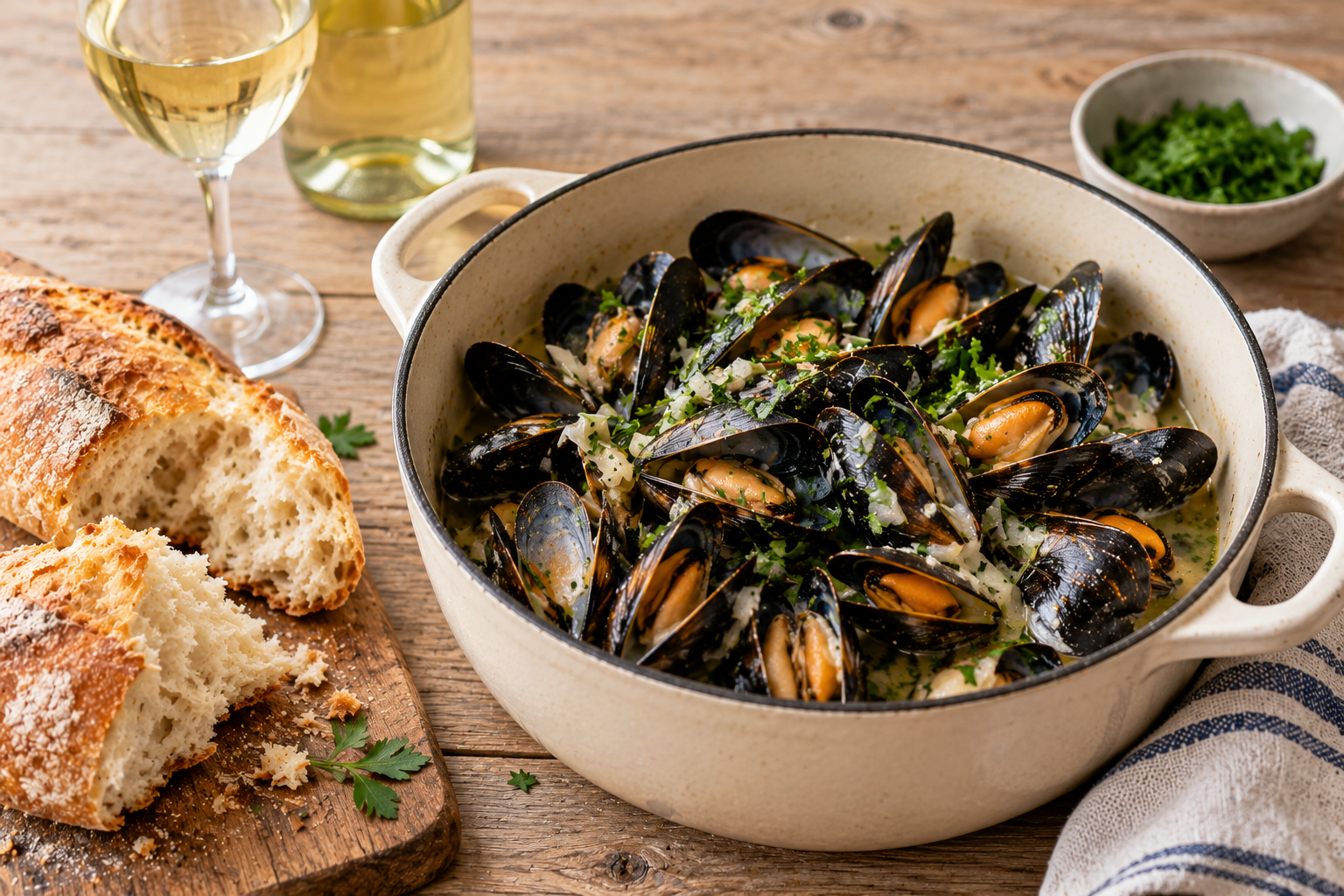
There is something about Norfolk mussels that I love. They have a personality of their own: small, sweet, briny and utterly unpretentious. We had them at the Jolly Farmers on Friday night, and I always enjoy the mussels that come out of Brancaster. They aren’t necessarily enormous at this time of year, but that’s part of their charm. A bowl of steaming mussels, garlicky white-wine juices and some crusty bread is one of the simplest pleasures of the season.
We have collected our own mussels in the past and spent time cleaning and purging them. It is a lot of work, and we’ve decided we’d rather buy them. Fresh mussels are generally reasonably priced, especially for something that feels like such a treat.
Norfolk mussels in white wine and garlic
Serves: 2 generously as a main course Time: about 20 minutes, plus cleaning
Ingredients
- 1 kg fresh, commercially harvested mussels
- 1 tbsp olive oil or 25 g butter
- 2 shallots, finely chopped (or 1 small onion)
- 3 garlic cloves, finely chopped
- 150 ml dry white wine (about ⅔ US cup / 5 fl oz)
- 2 tbsp chopped flat-leaf parsley
- A squeeze of lemon, optional
- Freshly ground black pepper
- Crusty bread, to serve
- Optional: 2 tbsp double cream for a richer sauce
Method
- Rinse and check the mussels as described below, discarding any that fail the checks.
- Warm the oil or butter in a large lidded saucepan. Gently soften the shallots for 3–4 minutes, then add the garlic and cook for another minute without browning.
- Pour in the white wine and bring to a lively simmer.
- Add the mussels, put on the lid and cook over a high heat for around 4–6 minutes, shaking the pan once or twice, until the shells have opened.
- Discard any mussels that remain closed after cooking. Stir through the parsley, black pepper and, if you like, the cream or a squeeze of lemon.
- Ladle into warm bowls with plenty of the cooking liquor and serve immediately with crusty bread for dipping.
How to clean and check mussels
- Buy from a reputable fishmonger or supplier and keep chilled until cooking. Follow the pack’s storage and use-by instructions.
- Tip the mussels into a colander and rinse under cold running water. Scrub off mud and grit with a stiff brush, and pull away any fibrous ‘beards’ towards the hinge.
- Discard mussels with broken shells. If a mussel is open before cooking, tap it gently: if it does not close, discard it.
- Do not leave shop-bought mussels soaking in fresh water; it can kill them. Commercially supplied mussels are generally already purified, so a quick clean is usually all they need.
- After cooking, discard any that have not opened. If in doubt about freshness, don’t eat them.
When are mussels in season?
The old rule is to eat shellfish in months with an R — September through April. It’s a helpful way to remember the traditional cooler-weather season, though availability depends on local conditions and the fishery. Autumn and winter are a wonderful time to enjoy Norfolk mussels. Smaller shells aren’t a disappointment: the flavour and the pleasure of eating them matter much more than size.
What about collecting and purging your own?
We’ve tried gathering mussels ourselves and purging them to remove grit — sometimes people talk about leaving them for up to 48 hours. But purging at home is not a reliable way to make wild mussels safe. It does not remove all harmful bacteria, viruses or marine biotoxins, and shellfish gathered from unmonitored waters can be dangerous even when they look and smell fine. Check local harvesting restrictions and official shellfish-water safety advice; for most home cooks, buying properly harvested and purified mussels is the easier, safer choice. Happily, they’re usually good value too.
Store-cupboard note: Garlic, olive oil and a little wine do most of the work here. Parsley adds freshness, but this is a wonderfully forgiving recipe. The one essential extra is bread — you won’t want to waste a drop of the sauce.
Leave a Reply